
Blog
Blog
AI products, tech insights & entrepreneurship
Trust Repair: A More Effective Action Framework Than Apologies for Small Teams
When trust breaks, apologies and promises often fall short. This article offers a four-layer action framework—acknowledge, attribute, compensate, prevent—to systematically rebuild trust in small teams.
The Exit Interview Is Not About Retention, It's About Calibrating the Team's Lens
Most managers treat exit interviews as a last-ditch retention effort, missing the real value: honest feedback that employees never dared to share while employed. Here's a practical framework to turn exits into calibration tools.
How I Make Scheduling Decisions When Two Projects Collide
When maintaining multiple products simultaneously, resource conflicts aren't solved by tools—they require a clear selection logic. This article breaks down a scheduling decision framework with a real scenario.
When to Set Rules in a Small Company? A Decision Framework for Rule Boundaries
Small companies need rules, but too many rules kill flexibility. This article offers a framework based on transaction cost and error risk to decide when to formalize and when to stay loose.
Product Operations Data Analysis: Stop Reading Reports, Start Asking Questions
Overwhelmed by dashboards? This article shares a framework that starts from business goals, breaks down the funnel, and leads to actionable decisions.
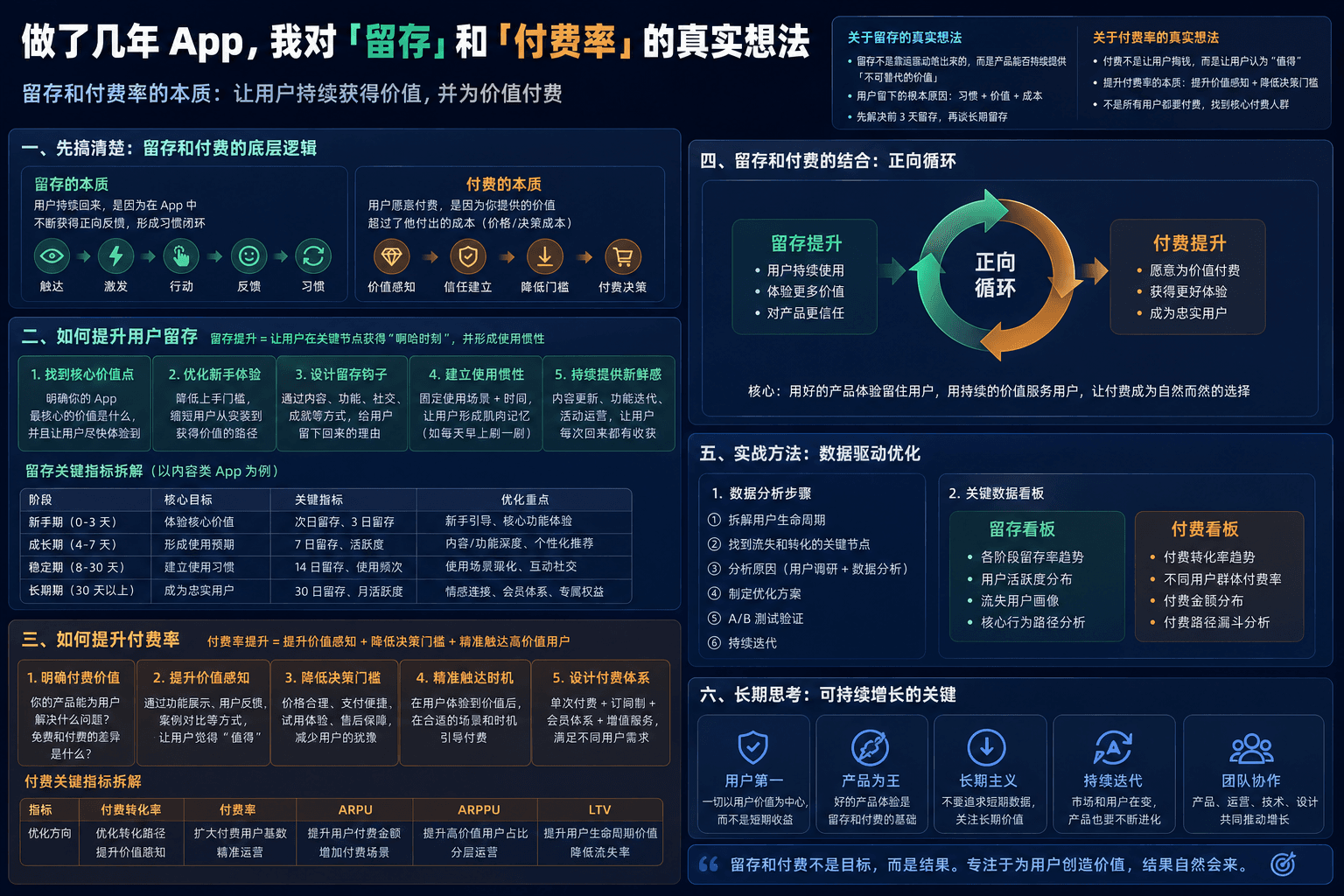
How to Improve App Retention and Conversion Rate
How to Improve App Retention and Conversion Rate
AARRR Is Not a Funnel, It's a Health Check: An Indie Dev's Operations Review
The AARRR model is not a user funnel but a systematic product ops checklist. This article breaks down each stage with an executable checklist and common pitfalls from an indie developer's perspective.
From One-on-One Chat to Automated Segmentation: A Solo Developer's User Operations Evolution
As your user base grows, manual support stops scaling. Here’s a practical framework for user segmentation, with checklists and code examples to automate your operations.
Poor Retention? Don’t Blame the Missing Community
Many products blame retention issues on not having a community. This article argues that, for resource-constrained teams, automated activity loops can be more effective than building a community from scratch.
Page 9 of 10